15.3.2 Bugs in the T-PHOT photometry
During DR1 processing, it was found that that (i) the PSF-fitting code was applying the source positional registration correction, i.e. after-fit re-centering, in the wrong (opposite) direction, and (ii) the PSF Homogeneization code (written in Python) handled the PSFs and convolution kernels following the numpy logic, while the Photometry code (in C++) handled them with FITS logic, causing an inversion of the rows and columns of the arrays. The first issue only affected the PSF-fitting runs, while the second one all of the template-fitting runs (T-PHOT, including PSF-fitting).
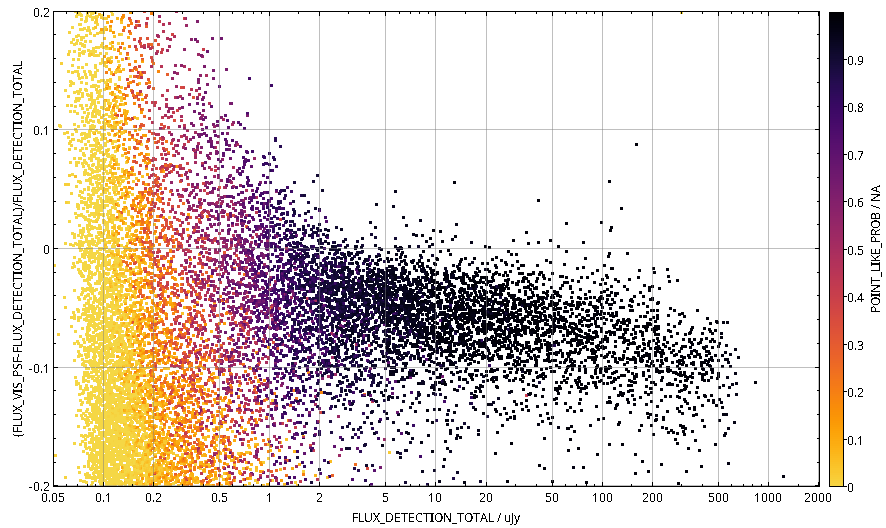
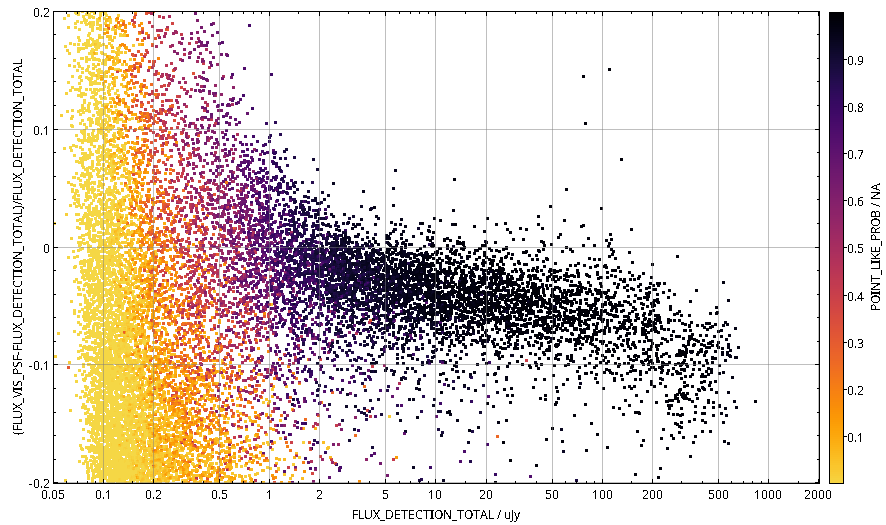
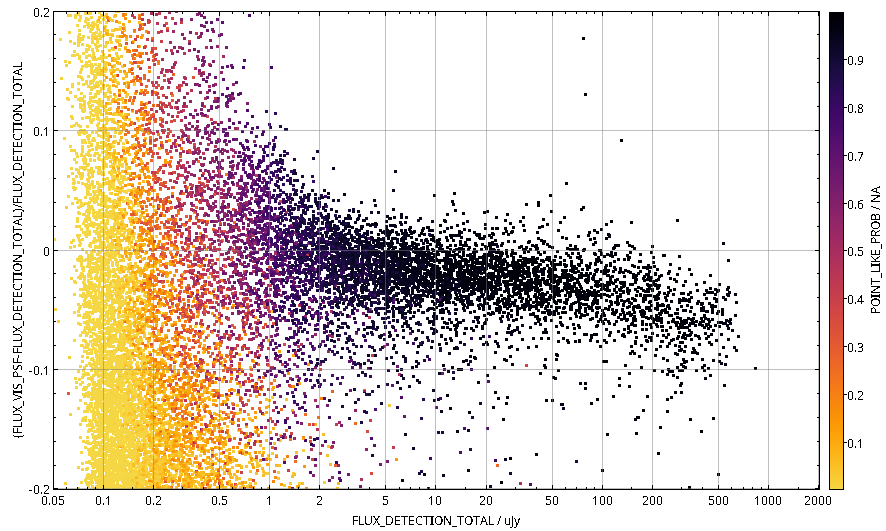
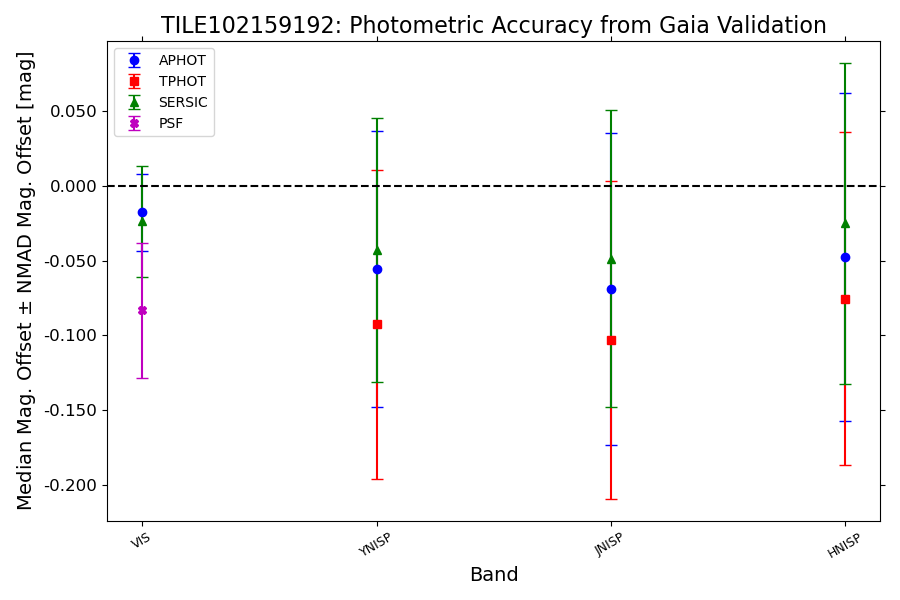
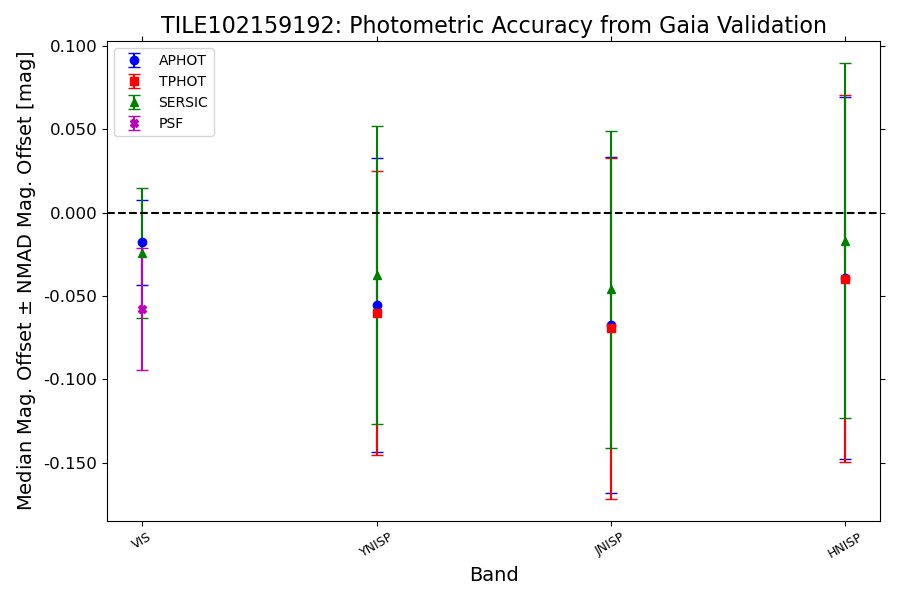
However, because the VIS and NISP PSFs are sharp and quite round in the central pixels, the effect of these bugs were not dramatic on galaxies, and only really affected the measurements of point-like sources (this is the main reason why they were not spotted before). Fig. 15.1 shows the effect of the correction of the two bugs on the VIS PSF-fitting runs on a test tile; the bias and trend of point-like sources (comparing their flux against that measured in large apertures) both clearly improve. As an effect, the difference between A-PHOT and T-PHOT measurements of GAIA stars in NISP bands (Sect. 3.6 in the MER DR1 pipeline paper; Sect. 9.5 and Fig. 17 in the Q1 paper) disappears, and the VIS PSF-fitting measurement improves as well (Fig. 15.2).